Few pieces of equipment influence your success in the field more than the scope mounted on your rifle. A quality optic can help you identify targets more clearly, shoot more accurately, and make confident decisions when conditions are less than ideal. The wrong optic can create frustration, limit your visibility, and make even a capable rifle feel difficult to use.
That is why choosing a rifle scope is about much more than picking the highest magnification or the biggest price tag. The best optic is the one that matches your shooting environment, the intended use, and performance expectations. From magnification and lens quality to durability and long-term value, a few key factors consistently separate a great scope from an expensive mistake.
The Three Things That Matter Most in a Rifle Scope
- Match Magnification to Environment: Use low power for thick brush, medium for general hunting, and high power for long-range targets.
- Prioritize Glass Quality: Premium lens coatings offer better low-light visibility than cheap high-magnification glass.
- Consider Premium Used Optics: Carefully inspected pre-owned scopes can deliver excellent performance and value without the cost of buying new.
Investing in high-quality firearm optics can transform your shooting performance overnight. Navigating the sea of options can feel overwhelming when every manufacturer promises pristine clarity and indestructible construction. The reality is that the best scope isn’t the most expensive one on the shelf. It is the one that perfectly aligns with your specific rifle and your shooting environment.
Whether you are a first-time rifle owner stepping onto the range or a seasoned backcountry hunter who has logged thousands of miles glassing for elk, the optic sitting on top of your rifle is one of the most consequential decisions you will make. Unlike the rifle itself, your scope directly determines what you see, how clearly you see it, and whether your follow-through results in a clean, ethical shot or a miss. Getting this choice right does not require spending top-dollar on new retail glass. However, it does require an understanding of what the specifications actually mean in the field.
At RKB Armory, we help shooters skip the confusion and the steep retail markups. We deal exclusively in high-quality used optics, never refurbished gear. This means you get access to elite, combat-proven, and hunt-ready glass that has passed strict physical inspections. If you are trying to figure out where to spend your money and where to save it, this guide will break down the exact formula for choosing your next optic.
Understanding Magnification Metrics
Magnification is the first specification most shooters look at, but it is also the easiest to misjudge. Bigger numbers are not always better. If you buy a massive variable-power scope for hunting thick timber, you will struggle to find a deer in your viewfinder.
The ideal magnification range depends largely on where and how you plan to shoot:
- Deep Woods Hunting: A low-power range like 1-4x or 1-8x provides a wide field of view and fast targeting.
- Open Plains & Plinking: A medium power range, like 3-9x or 4-16x, offers a versatile balance of distance and speed.
- Precision & PRS: High-power settings like 5-25x and up let you resolve fine target details at 500+ yards.
Fixed power scopes offer simplicity and fewer moving parts. Variable scopes give you flexibility across changing landscapes. The trick is choosing a range where your lowest setting still allows for quick target acquisition at close distances.
Another overlooked factor is the exit pupil, which affects how bright the image appears at a given magnification. Higher magnification can reduce brightness, especially in early morning or late evening conditions when light is already limited. That is why practical scope selection is not just about power. Glass quality, coatings, an illuminated reticle, and objective lens size matter just as much as magnification.
Evaluating Lens Quality and Objective Diameters
Glass quality trumps magnification every single day of the week. A premium brand at 10x magnification will look sharper and transfer more light than a cheap budget scope set to 24x. High-quality lenses receive advanced chemical coatings to reduce glare and maximize light transmission.
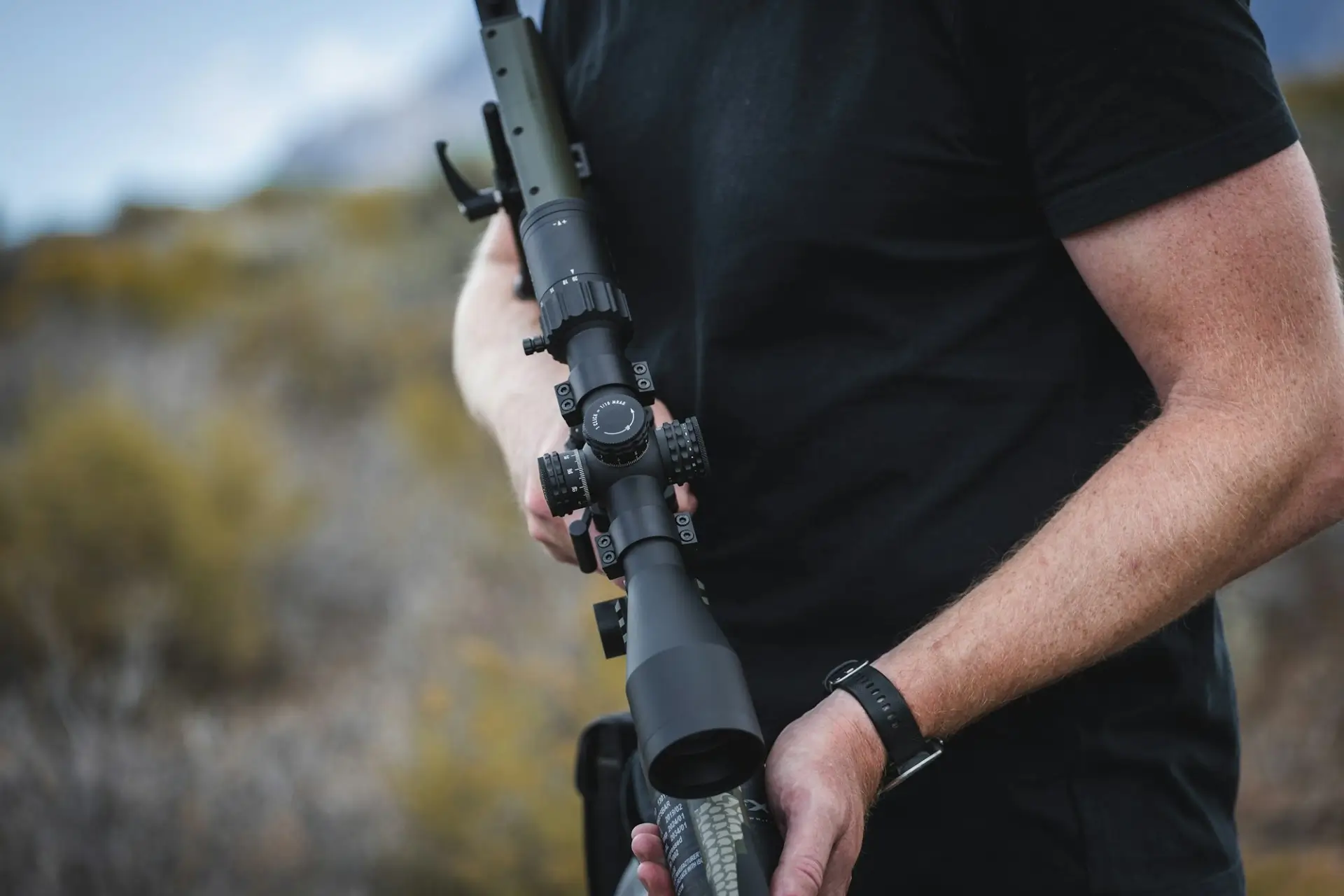
The objective lens size also affects overall brightness. The objective lens, or the large bell at the front of the scope, controls how much light enters the optical system. Larger objective lenses can improve visibility during dawn and dusk, but they also require higher mounting positions. For most hunting and shooting applications, a 40-44mm objective offers a practical balance between light transmission and mounting height.
Lens coatings are another specification worth understanding. Terms like “coated,” “multi-coated,” and “fully multi-coated” are not interchangeable. Fully multi-coated optics apply anti-reflective coatings to all air-to-glass surfaces, improving clarity, contrast, and low-light performance.
Of course, even the clearest glass is only valuable if the scope can maintain zero and perform reliably under recoil and changing environmental conditions.
Check for Real-World Durability
A scope is a precise optical instrument mounted atop a controlled explosion. Every time your rifle fires, the optic absorbs intense G-forces. If the internal erector tube or turret tracking mechanisms are cheap, your point of impact will shift.
Look for tubes machined from a single piece of aircraft-grade aluminum. True tactical and hunting scopes are nitrogen- or argon-purged, helping to prevent internal fogging when transitioning from a warm truck to freezing mountain air. Brands like Nightforce, Trijicon, and Leupold excel here because their housings are built to withstand literal combat environments.
Turrets, Tracking, and Zero Retention
Mechanical reliability is just as important as optical clarity. The turrets, those adjustment knobs on the top and side of your scope, control elevation and windage. Quality turrets click with a positive, tactile feel and hold their position under recoil. Vague or mushy turrets are a warning sign that internal tolerances are loose, which directly translates into inconsistent point-of-impact shifts between shooting sessions.
Zero retention refers to your scope’s ability to return to the same point of aim after adjustments or extended use. A premium optic can be dialed up for a 600-yard shot and returned to your 100-yard zero with confidence. Cheaper glass drifts. When evaluating any used scope, confirm that the turrets move in clean, defined increments and that the reticle does not appear to shift when you cycle through adjustments.
The Advantage of Buying From a Trusted Source
Choosing the right rifle scope is about more than magnification, glass quality, and durability. It is also about knowing the optic has been properly evaluated before it reaches your rifle.
RKB Armory operates out of our dedicated facility, serving precision marksmen and seasoned woodsmen nationwide. Our team brings years of collective evaluation experience, inspecting thousands of independent optical systems over the last decade. This hands-on process filters out the lemons, ensuring that every used optic listed in our inventory meets true operational standards.
If you are building a hunting rifle, upgrading a range setup, or preparing for long-range shooting, knowing what to look for in a scope can help you make a smarter investment. With those fundamentals in mind, here are answers to a few common questions buyers often ask.
FAQs Regarding Firearm Optics
Q: What size main tube should I choose?
A: The standard tube sizes are 1-inch, 30mm, and 34mm. Larger tubes generally do not increase light transmission, but they often provide a greater range of elevation and windage adjustment, which can be beneficial for long-range shooting.
Q: How much eye relief do I actually need?
A: Many shooters prefer at least 3.5 inches of eye relief, particularly when using higher-recoiling calibers. Adequate eye relief improves comfort and reduces the risk of scope contact during recoil.
Q: What reticle style is best for hunting versus target shooting?
A: The best reticle depends on your intended use. Many hunters prefer simpler reticles that provide a clear sight picture and fast target acquisition, while long-range and precision shooters often choose MOA or MIL-based reticles that support holdovers and correction adjustments. Both First Focal Plane (FFP) and Second Focal Plane (SFP) reticles have advantages, making the right choice largely dependent on shooting style and preference.
Q: Does brand name matter when buying used?
A: Absolutely. On the used market, pedigree matters even more than retail because you are evaluating a product’s track record over time. Brands like Nightforce, Leupold, Vortex, and Trijicon have demonstrated consistent quality control across decades of production. Their warranty programs and parts availability also provide long-term security that no-name budget glass simply cannot match.
Find Your Next Optic Today
The secondary market is the ultimate shortcut to owning elite-tier firearm optics without the premium price tag. The shooters who get the most out of their equipment are not the ones who spent the most; they are the ones who matched their gear to their mission with intention.
A well-chosen used Leupold or Nightforce will outperform a brand-new budget scope every single time, both on the bench and in the backcountry. RKB Armory helps shooters access premium used optics that have been carefully inspected for quality and performance.
Check out our current selection to upgrade your setup today.
Browse the RKB Armory Shop Inventory or Get a Quote to Sell Your Optic