A scope can look perfect on paper and still feel completely wrong once you’re behind the rifle. What you need from it starts to change once you consider where you’ll be shooting and how far away the target is. A feature you barely notice at shorter distances may become much more useful when you start reaching farther out.
Think about a hunt in thick timber, where lower magnification and a wider field of view can be useful. Take that same scope out to shoot steel several hundred yards away, and you may start looking for features you barely thought about before. Turret adjustments and parallax control become more relevant, and the reticle itself can affect how you make corrections downrange.
Understanding those differences makes it easier to narrow down the specifications that actually matter before comparing brands or prices. RKB Armory carries used optics with a variety of features and configurations, including precision and hunting optics for shooters who know what they need from their setup.
What Matters as Shooting Distance Changes
- Magnification should reflect the distances you realistically expect to shoot
- Reticle choice depends partly on how you prefer to account for elevation and wind
- Turret adjustment and parallax control can become more important as shooting distances grow
- Hunting, target, and long-range setups can place different demands on an optic
- Once you know the features you need, condition and build quality become important considerations when comparing used optics
How Far Are You Actually Shooting?
Before getting too deep into scope specifications, think about the kind of shooting you do most often. A rifle used mostly at shorter ranges wouldn’t really benefit from the same features as a firearm that you regularly use several hundred yards out.
That gives you a more useful starting point for deciding how much magnification you need and which adjustments you’ll actually use.
At RKB Armory, we see plenty of variation in the used optics that come through our inventory. If terms like first focal plane or MRAD are unfamiliar, our guide to modern optics types covers the basics before getting into the differences that matter at various shooting distances.
What Your Scope Needs to Do Farther Out
Once you’re shooting farther, the scope’s adjustment capabilities start to deserve a closer look. Those are some of the differences we look at when inspecting used optics at RKB Armory.
A few things to look at on the scope itself:
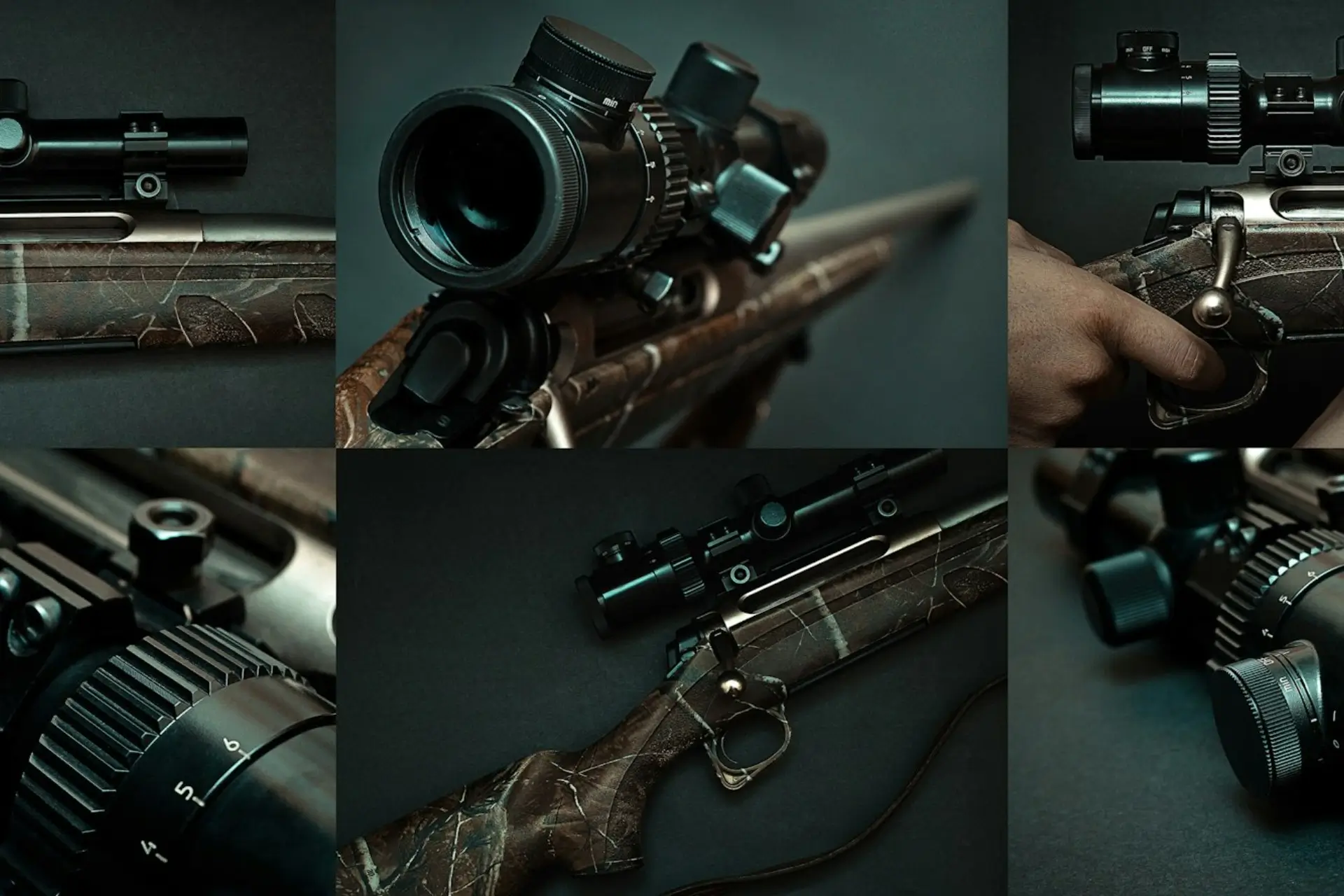
- Elevation travel: How much adjustment the turret provides in MOA or MRAD
- Parallax adjustment: Whether the optic allows you to correct for parallax at different distances
- Reticle location: Whether the reticle stays the same apparent size or scales as magnification changes
How Much Magnification Do You Need at Different Distances?
A 3-9×40 can cover plenty of common hunting situations, while longer shots or smaller targets may call for more magnification. Someone shooting paper or steel several hundred yards out might look at a 4-16x or 5-25x instead.
RKB Armory carries used scopes from brands such as Nightforce, Leupold, and Vortex, giving you a few places to start once you know the magnification range you’re looking for.
Of course, the number on the magnification ring doesn’t tell you everything. Push a 6-24x scope to its upper end, and poor glass becomes pretty obvious. The turrets still need to be adjusted consistently, too. In practice, a well-built 4-16x may prove more useful than a higher-powered scope that falls short in those areas. For a used optic, that makes its overall quality and condition worth considering alongside magnification.
Build Quality Matters More as Demands Increase
Magnification and reticle choice only get you so far if the scope can’t hold up to how you use it. A hunting optic may spend its season getting bumped through brush or riding in a truck, while a long-range scope can see repeated turret adjustments throughout a day at the range.
A used scope can tell you quite a bit once you have it in hand. The view through the glass is one place to start, but try not to ignore the turrets. They should feel consistent whenever you make adjustments. Anything that feels loose or unusual is worth a second look before you make a decision.
At RKB Armory, used optics are inspected before they’re listed for sale, giving buyers more information about what they’re comparing beyond the magnification number on the box.
Once you know the distance you shoot and the features that matter for it, the rest of the decision gets much easier. Magnification, reticle design, adjustment reliability, and overall condition should all support the job you’re asking the scope to do. From there, you can browse RKB Armory’s used optics and compare what’s currently available.
If you have an optic that no longer fits that job, RKB Armory’s Sell Your Optic page explains how to send it in for evaluation.
Frequently Asked Questions
Do I need a first focal plane or a second focal plane scope?
First focal plane scopes are useful when you want the reticle markings to remain consistently accurate as you change magnification. Second focal plane scopes keep the reticle the same apparent size and can be a simpler choice for general hunting or target shooting.
Should I choose MOA or MRAD for longer-distance shooting?
Either system can work well. MOA and MRAD are different units of angular measurement, so the better choice usually comes down to which system you understand and prefer to use. Matching the reticle and turret adjustments to the same system can also make calculations simpler.
Why does parallax adjustment matter more at longer distances?
If your eye shifts behind the scope, parallax can make it look like the reticle moved against the target even though the rifle didn’t. A parallax adjustment helps correct that effect for the distance you’re shooting. It can be especially useful when small aiming errors matter farther downrange.
Match Your Next Scope to How You Shoot
There isn’t one set of scope features that works best at every distance. What matters is finding an optic that gives you the magnification, adjustments, and overall performance that make sense for the shooting you actually do. Once you know what that looks like, you can focus your search on scopes that fit those needs.
Looking for a better fit? Browse RKB Armory’s current inventory, including options from Leupold, Nightforce, Trijicon, and Vortex. You can also contact RKB Armory with questions about a specific model.