What makes today’s Aimpoint different from the red dot sight the company introduced in 1975?
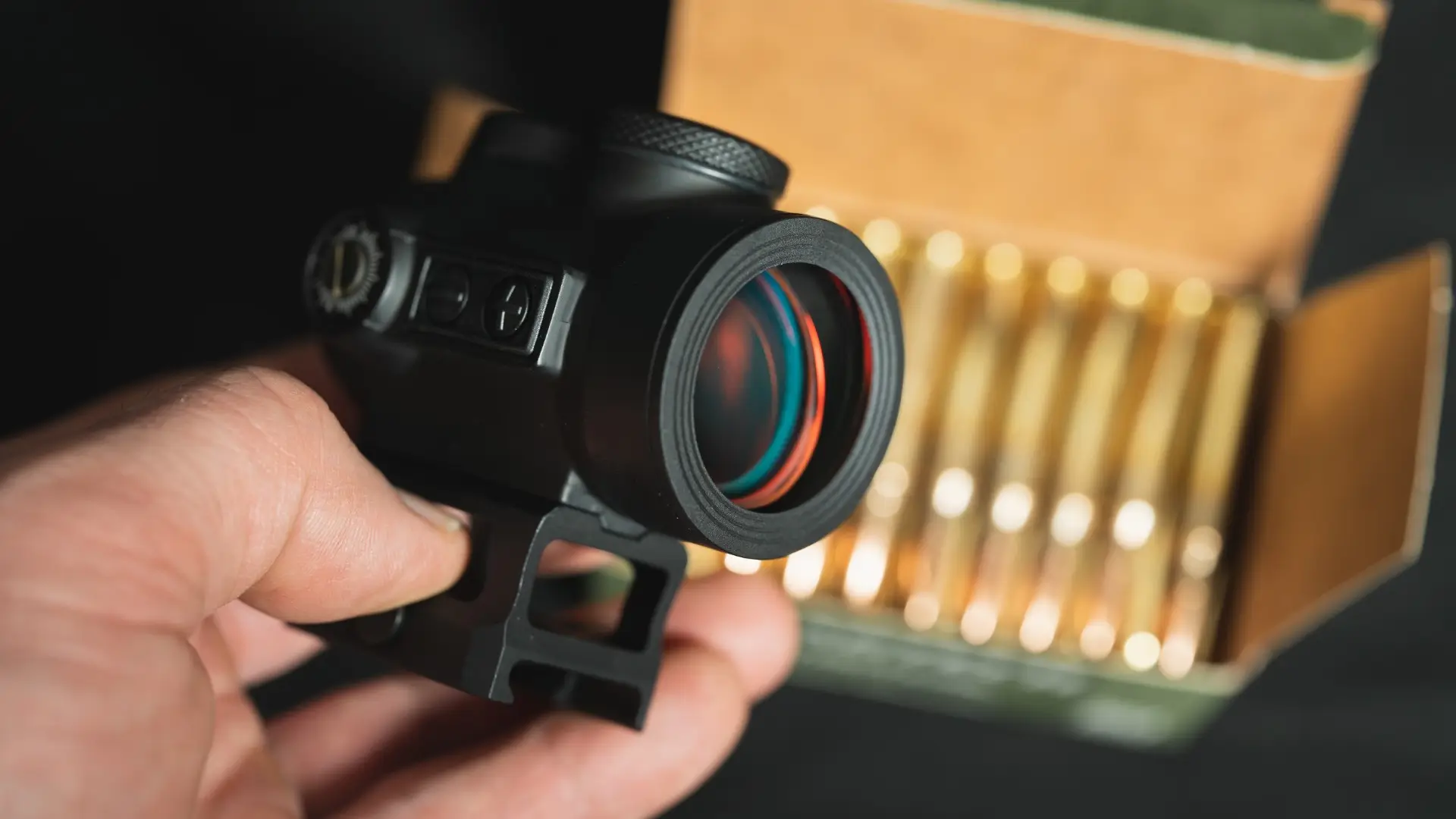
Aimpoint helped bring the commercial electronic red dot sight to market nearly five decades ago, but the technology didn’t stop with that first design. Over time, longer battery life, more compact housings, 1X aiming, and designs built for demanding conditions changed what shooters could expect from a red dot sight.
That evolution is what makes Aimpoint worth a closer look. Features that seem standard on a modern red dot today came through years of development, and understanding how they changed can make the differences between Aimpoint models and generations much clearer.
Why does that matter if you’re shopping today?
An Aimpoint’s battery system, size, design, and intended application can tell you much more than the brand name alone. At RKB Armory, we have bought and sold used Aimpoint optics from different generations, and have had the opportunity to compare those differences and find an optic that makes sense for their needs.
With Aimpoint’s early electronic sights and its excellent Comp, Micro, Duty RDS, COA, and Acro lines, the technology tells a much bigger story than simply how long a battery lasts.
How Aimpoint’s Red Dot Technology Started
Aimpoint’s red dot technology dates back to 1975, when the company introduced the Aimpoint Electronic, being the world’s first commercial red dot sight. As new models followed, Aimpoint continued developing the technology around that original concept.
The designs became smaller as battery efficiency improved, and new configurations expanded where and how a red dot could be used. Those changes are still relevant when comparing Aimpoint optics today.
At RKB Armory, we buy and sell used Aimpoint models, giving customers a chance to see how the technology differs from one optic to the next and to find the right fit at a price that makes sense.
Battery Life That Lasts for Years, Not Hours
One of the biggest developments in Aimpoint’s red dot technology came from reducing how much power the sight needed to stay running. Aimpoint’s Advanced Circuit Efficiency Technology, or ACET, helped extend battery life far beyond earlier electronic designs.
That progress can be seen across the Comp family. Certain models are rated for around 50,000 hours of constant operation at specified daylight settings, while the CompM4 reaches 80,000 hours. Instead of thinking about runtime in hours or days, users could keep certain Aimpoint red dots powered for years.
What Longer Battery Life Changed
- Constant-on use became practical: Certain Aimpoint red dots could remain powered instead of being switched on and off between uses.
- Battery changes became less frequent: Multi-year runtime reduced how often users needed to think about replacing a battery.
- Readiness became part of the design: An optic that stays powered can be ready without requiring the user to switch it on first.
- Efficiency improved without relying on one standard setup: Battery type and runtime still vary between Aimpoint models and generations.
When Aimpoint Technology Was Put to the Test
Aimpoint’s Comp series reached a major milestone in 1997 when the U.S. Army adopted the CompM as the M68 Close Combat Optic. After much testing and evaluation, the Army initially contracted for 100,000 units, bringing Aimpoint red dot technology into widespread military use.
That matters because many of the qualities associated with Aimpoint optics today, including long battery life and construction designed for demanding conditions, have continued practical value well beyond military use.
For buyers looking at Aimpoint today, that military history helps explain why durability, long battery life, and simple operation became such important parts of the brand’s red dot designs. Those same qualities can still be useful when choosing an optic for hunting, competition, or everyday range use.
What Aimpoint Technology Means for Buyers Today
Aimpoint technology has changed quite a bit over the years, and those differences are worth looking at when you’re comparing models. Keeping a few details in mind can narrow down what makes sense for your setup:
- Battery life and power source: Runtime and battery type vary between Aimpoint models, so check the specifications for the individual optic. Avoid Alkaline batteries!
- Size and design: Compare the optic’s overall size and housing with the firearm and setup you have in mind.
- Brightness settings: Make sure the available settings fit the conditions where you expect to use the sight.
- Mounting: Confirm that the mount works with your firearm and preferred setup.
- Condition when buying used: Check the lenses, housing, controls, battery compartment, and mount for signs of wear or damage.
The technology behind Aimpoint red dots matters most when those developments translate into features you can actually use. Long battery life, compact designs, and straightforward aiming can all make a difference, but the right combination will vary from one Aimpoint to another.
At RKB Armory, we buy and sell used optics from well-known brands like Holosun, Leupold, Aimpoint, and others, with each item individually inspected and described by condition. Our current inventory gives buyers a place to compare Aimpoint models, see how these features come together, and find an optic that makes sense for their setup.
Frequently Asked Questions
How long does an Aimpoint battery last?
It depends on the model. Some Aimpoint sights are rated for around 50,000 hours of operation at specified daylight settings, while the CompM4 reaches 80,000 hours, or more than eight years, of continuous use.
Is Aimpoint used by the U.S. military?
Yes. Aimpoint Comp sights have been used by the U.S. Armed Forces as the M68 Close Combat Optic for more than two decades, with newer Comp models continuing that role.
What does operationally parallax-free mean on an Aimpoint?
Aimpoint describes its red dot sights as operationally parallax-free, meaning the dot does not need to be perfectly centered in the sight for normal aiming. This works in tandem with unlimited eye relief to give the user greater flexibility in eye position.
Is a used Aimpoint optic still reliable?
It can be, but the condition of the individual optic matters. When buying used, check the lenses, housing, controls, battery compartment, mount, and full brightness range rather than assuming performance based on the Aimpoint name alone.
Ready to Find the Right Aimpoint for Your Setup?
Aimpoint red dot technology has changed considerably since its earliest designs, but features like long battery life, compact construction, and straightforward aiming continue to shape the optics available today. RKB Armory buys and sells used Aimpoint optics from Park City, Utah, serving customers nationwide.
Browse our current selection of used Aimpoint sights to compare available models, features, and condition.
Have an Aimpoint you’re no longer using? Sell your optic to RKB Armory and learn how the process works.